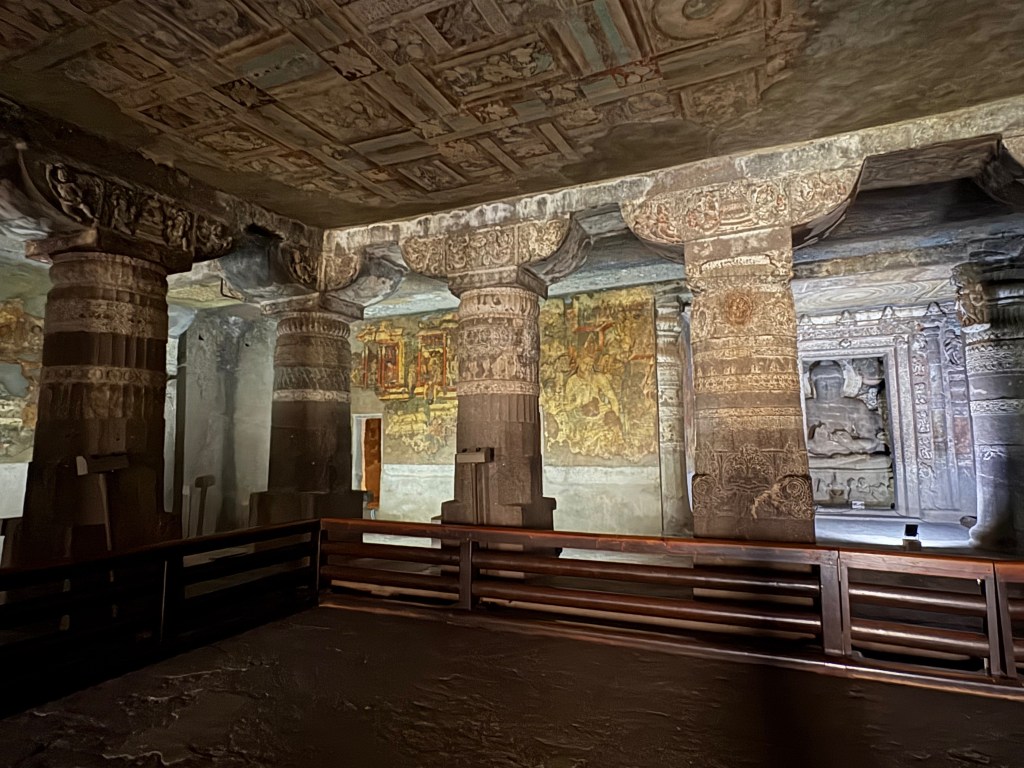
After three amazing days at Ellora caves, I travelled two hours north to Ajanta Caves, most of which are older than Ellora caves with the oldest belonging to pre Christian times. I got dropped off at my hotel and then had one of the attendants there, Wasim, take me on his scooter to the caves. His father worked at the caves and escorted me to the bus which would take me up a mountain to their entrance. Wasim’s father made me promise to visit his shop at the end of my visit. I tried to avoid this knowing it could only lead to his disappointment, but he was so nice that in the end I had to agree.

Cave 1 is one of the most remarkable of the 30 caves located here, which contains some of the best remaining murals. The facade is lavishly ornamented. An aisle is formed by a colonnade of pillars which leads to the giant Buddha statue above surrounded by his first five disciples (hidden behind the columns).

Cave 2 features a lovely painted ceiling and intricately decorated pillars and walls. Just stepping into these caves carries your consciousness to a different level, and your body to a cooler temperature. So soothing, relaxing, and vibrant with artistry and devotion.
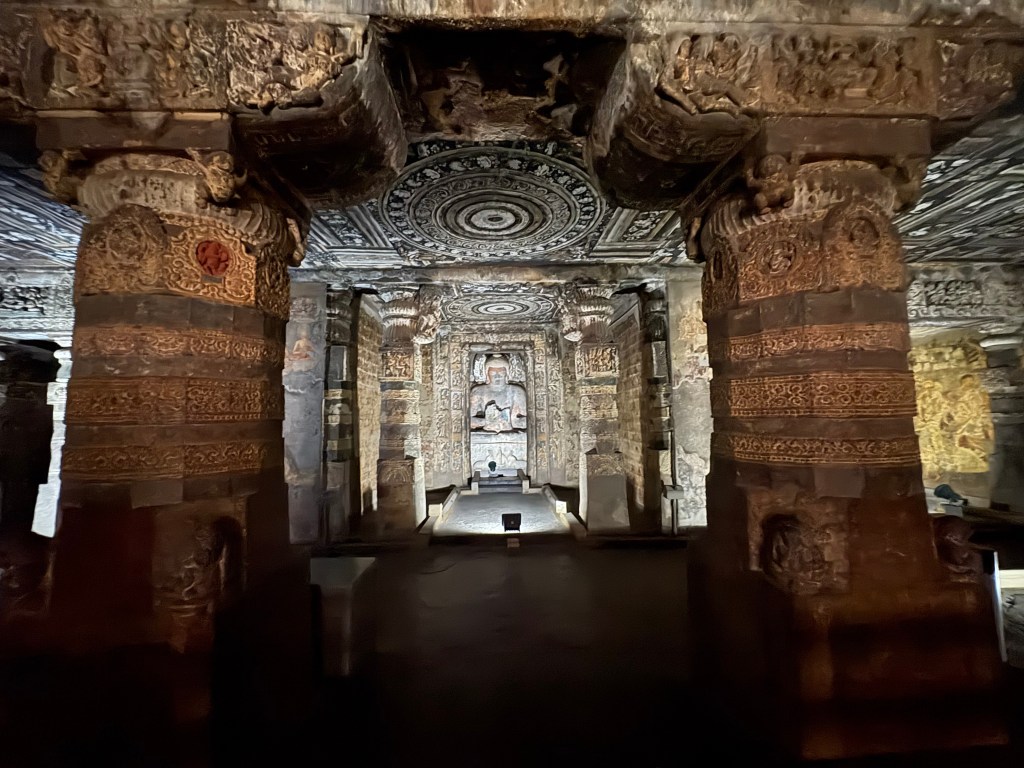
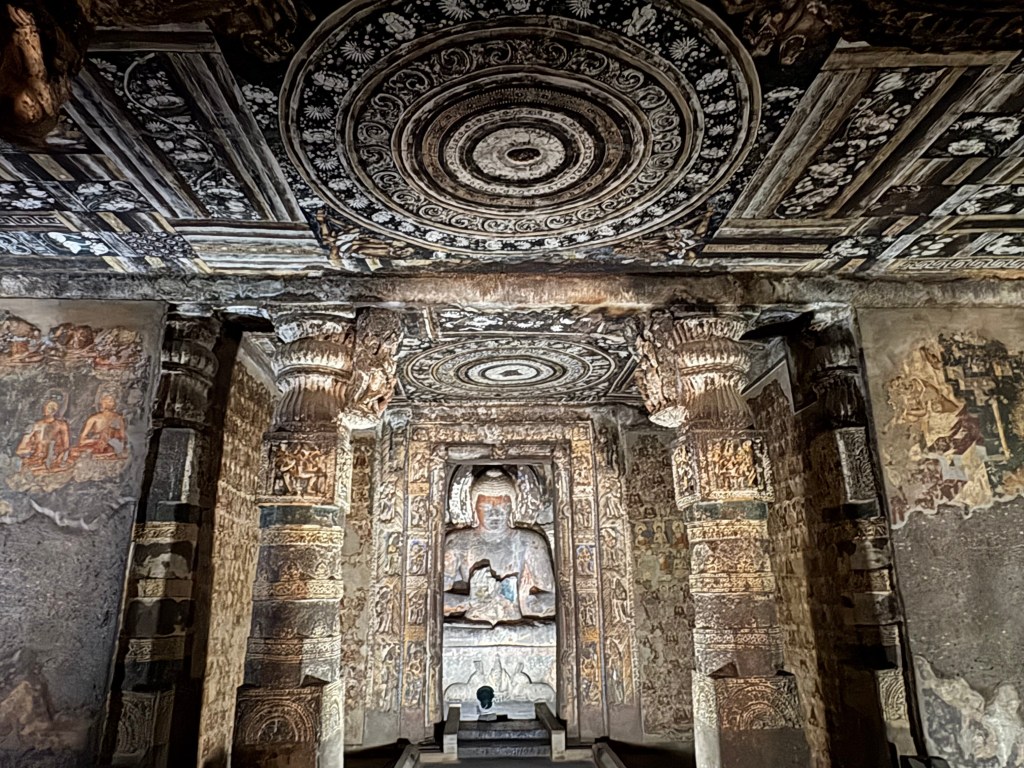
Cave 4 is the largest of the caves and leads to an expansive hall with 28 pillars.
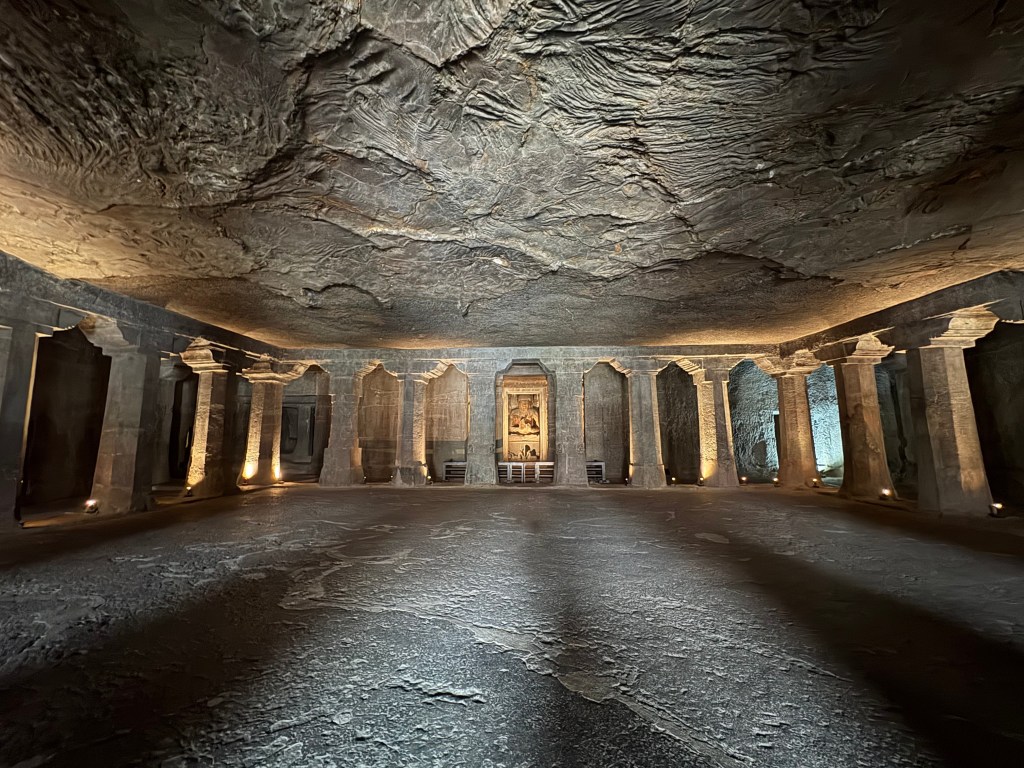
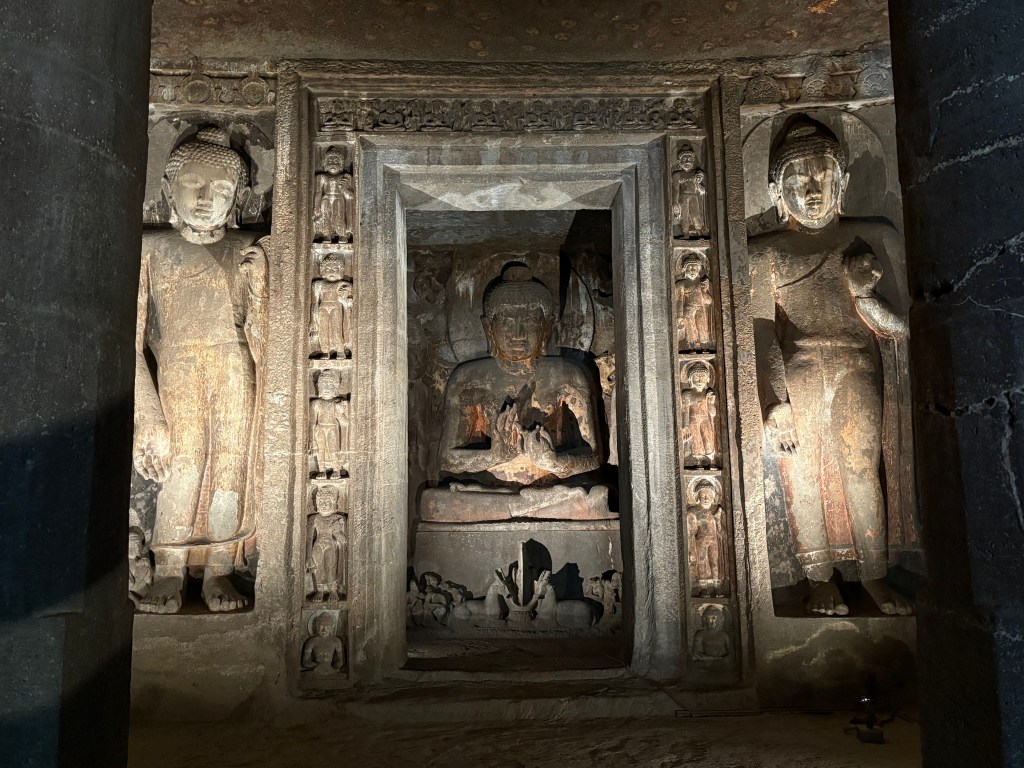
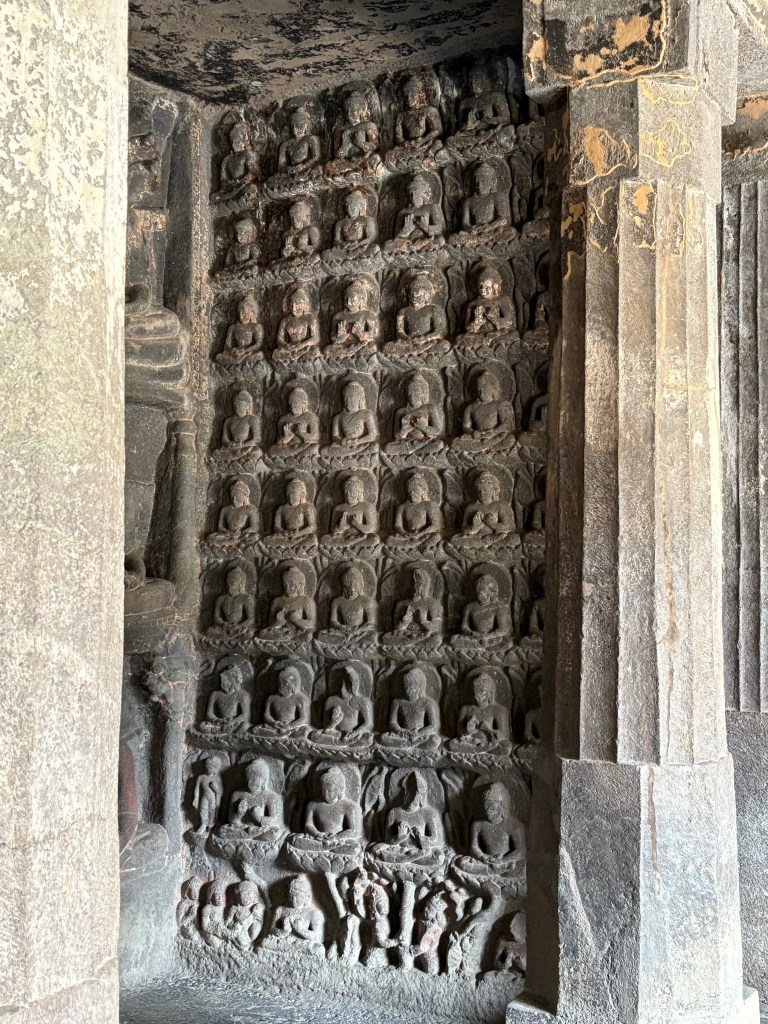
There are so many caves that I soon lost track of where I was…I found great joy in just lingering in the caves, feeling the stoppage of time…entering a timeless zone of deep meditation.

Some of the paintings on the walls and pillars dated back over 1,000 years.


The entrances themselves captivated you, stunning in decor and intricate in design.
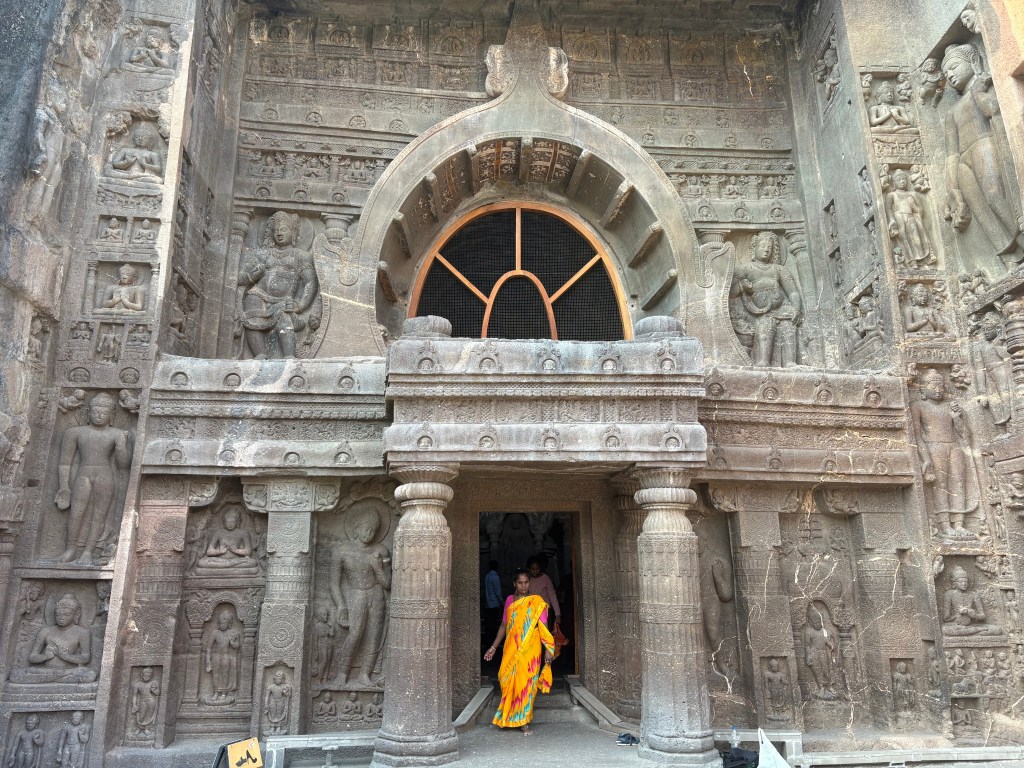
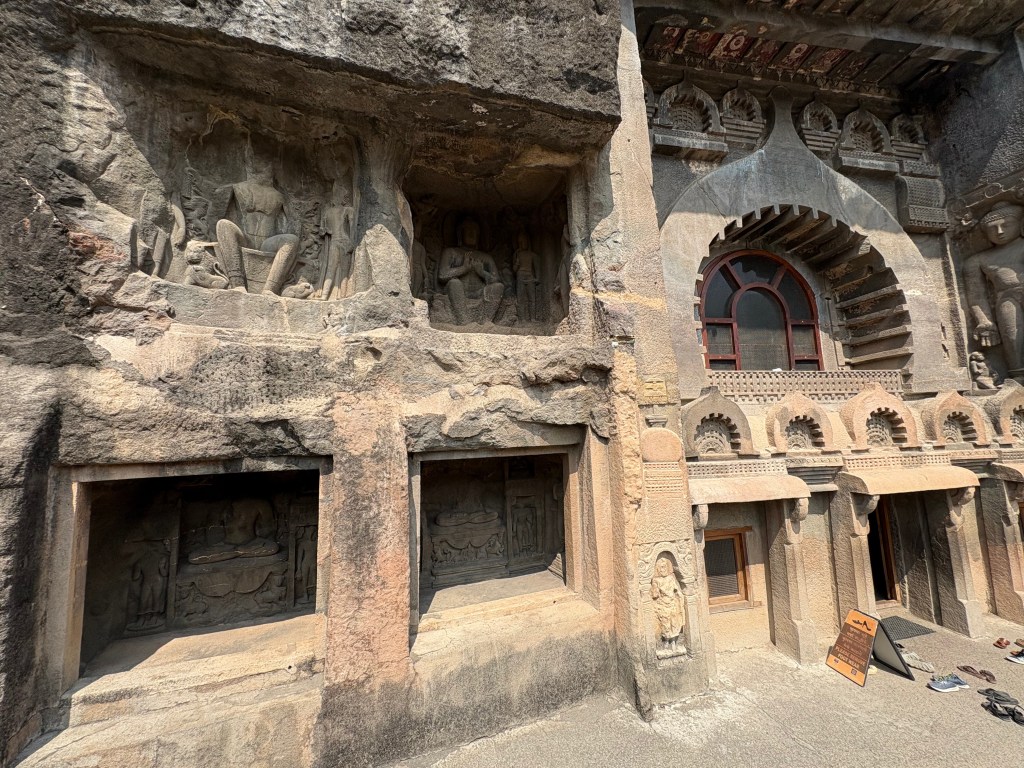
Standing on the edge of the ravine, I gazed down the line of caves and tried imagining when these caves vibrated with the meditations of their creators. The spacious halls are carved out of flood basalt and granite rock, excavated from the cliff face.
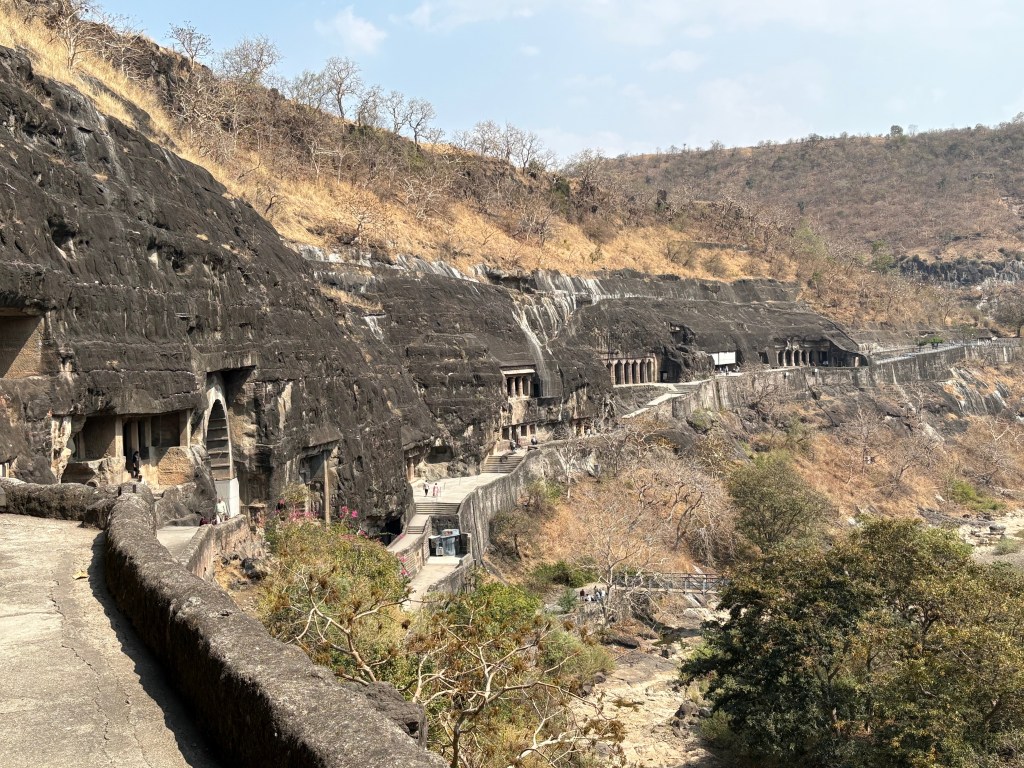
Cave 16 was probably my favorite cave, if such a things existed. I loved them all.
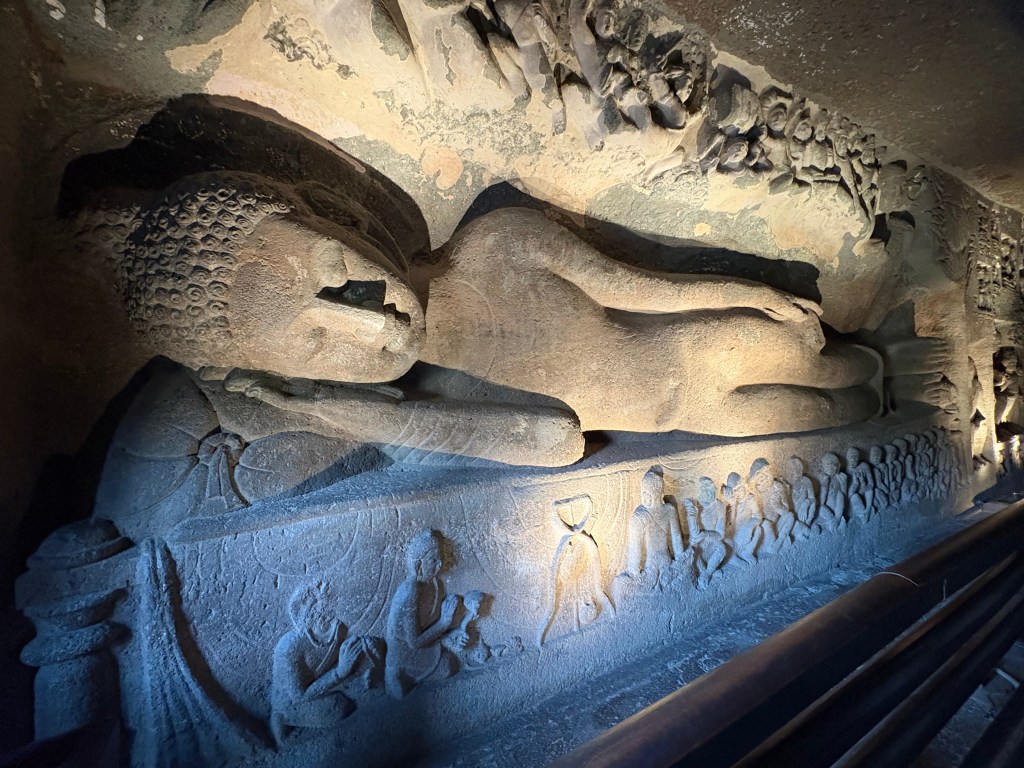
The caves were, in part, a monsoon retreat for monks, offering a sanctuary for meditation and study, as well as a rest stop for pilgrims and merchants along ancient trade routes.
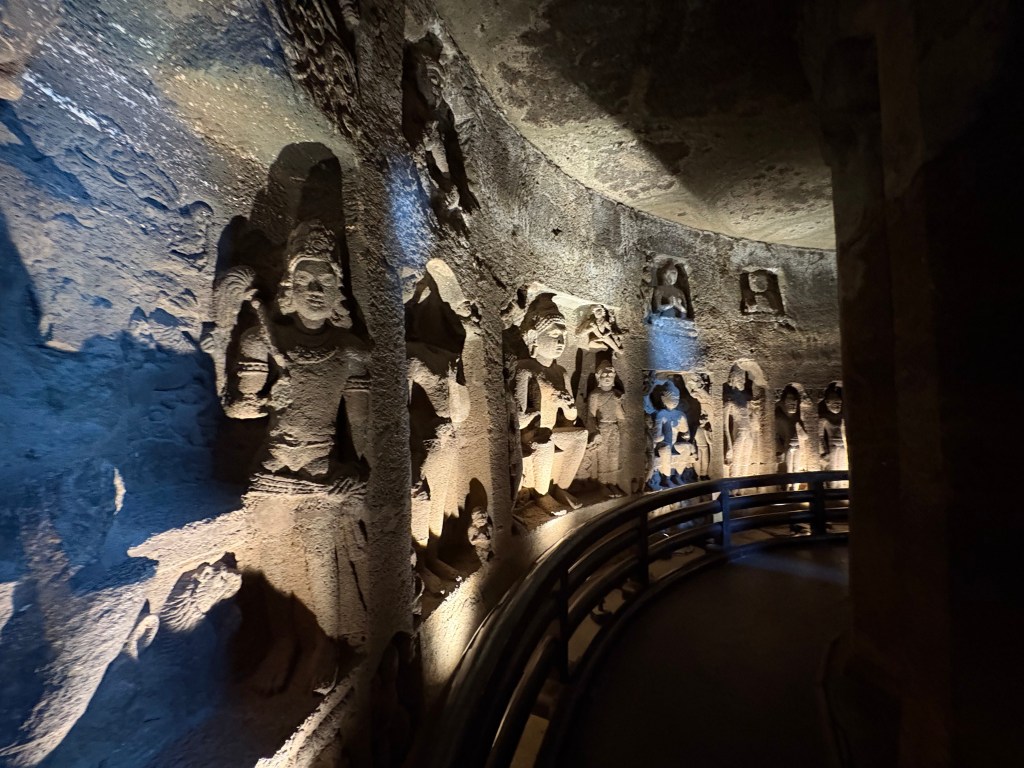
As Buddhism declined in India and Hinduism regained prominence, the caves were abandoned around the 6th century, left to neglect until their rediscovery. They were accidentally rediscovered in 1819 by British officer John Smith.

It’s been days since I visited the caves, but they still populate my psyche. Sometimes when I meditate and my mind begins to wander, I remember all those Buddhas sitting in those caves, silent, posed in contemplation, meditating through the centuries, and my mind goes silent.


 Divine Warrior
Leave a comment