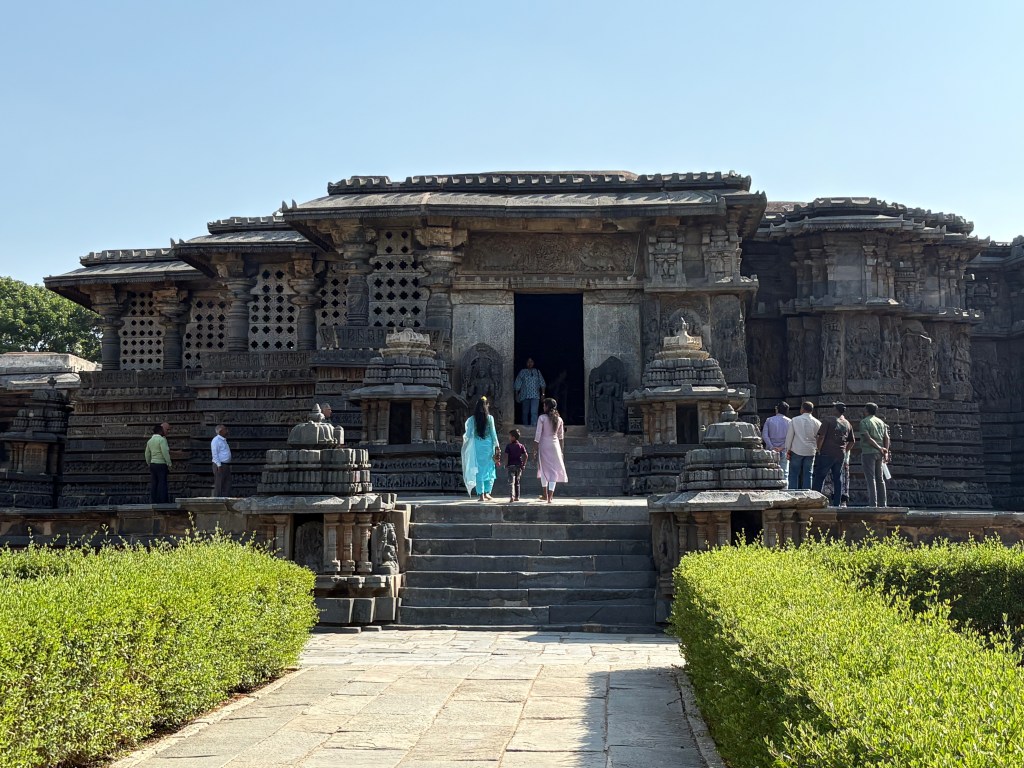
One of my traveling companions in Dwarahat, Nanjun, lives in Bengaluru and told us of fantastic temples in his home region of Karnataka, so from Hampi I took a car to Halebidu to begin my tour of these UNESCO World Heritage Sites. It was a beautiful drive through vast fields bordered by mountains and covered with green palms and verdant vegetation. The only problem: my driver texted the entire way. After nearly ramming into a stalled truck on the road that suddenly appeared after another truck veered out of the way, I asked him to please stop texting. He stopped…for about two minutes. I asked again. Same thing. Turned out he was texting on two phones and completely addicted while we maneuvered through the insane Indian traffic.
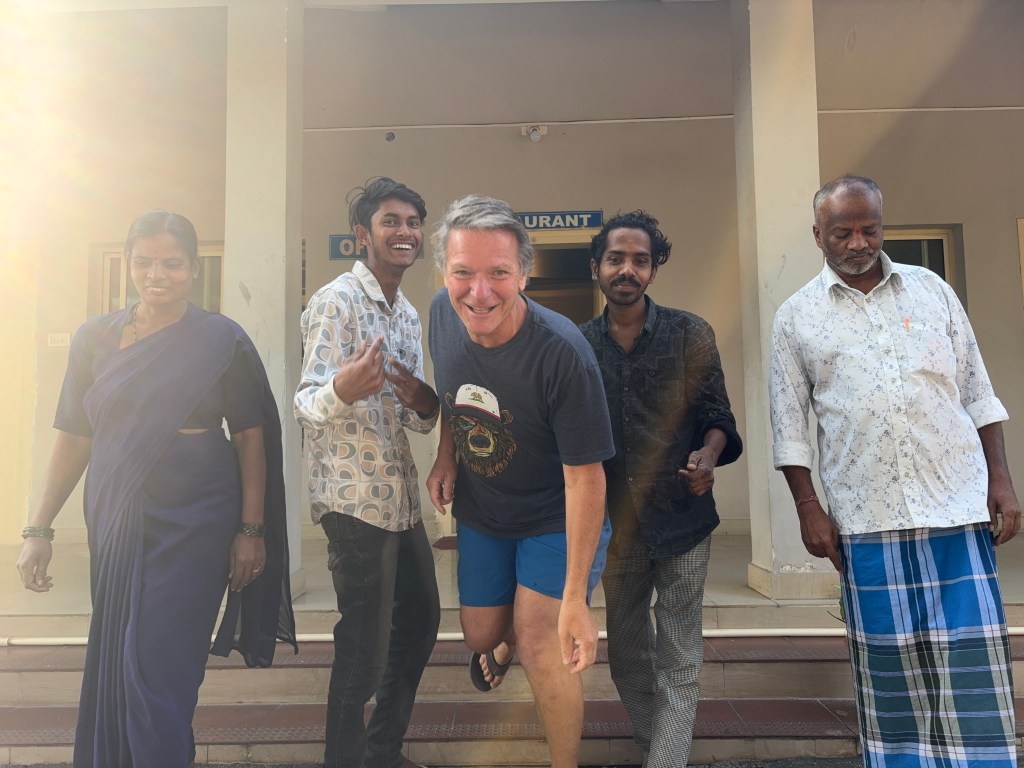
My hotel turned out to be a state-run facility that had a huge, overgrown garden, large trees, outdoor deck and rooms sequestered in a cluster of buildings. A friendly crew ran the place in quiet solitude. It was set off from any other buildings and located directly opposite the main feature of town: the Ancient Hoysala Shri Hoysaleshwara Temple. My room was quite spacious after the closets I had resided in while in Hampi. I couldn’t think of a better place to be for the next three days. They served me a delicious lunch immediately upon arrival!
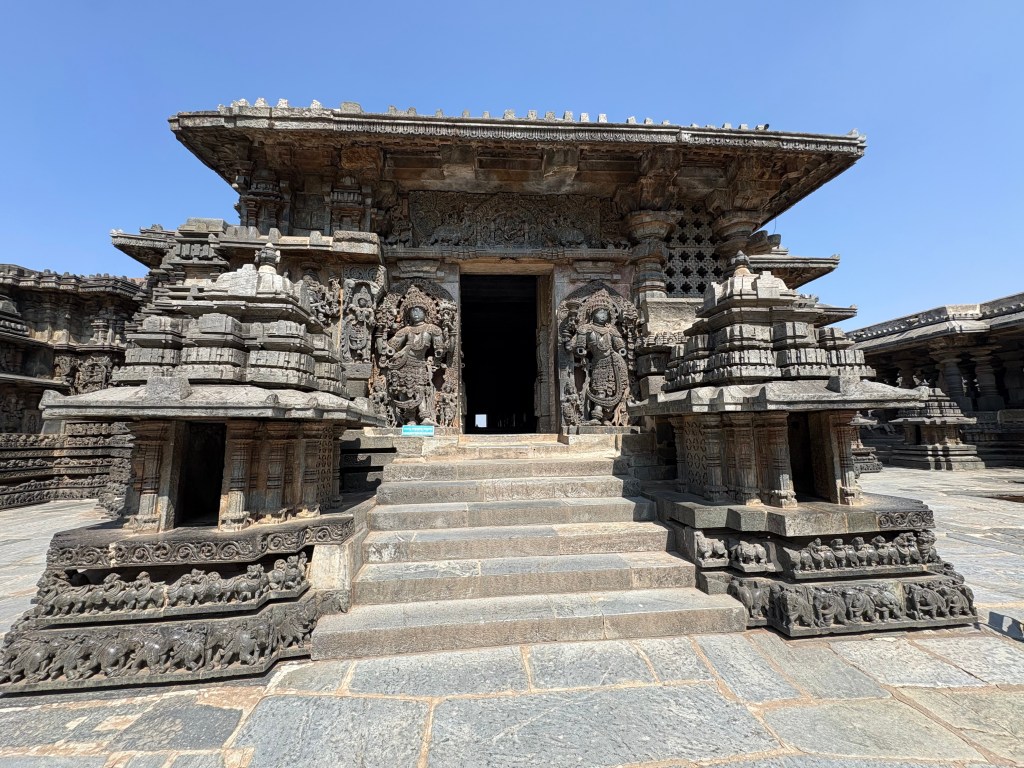
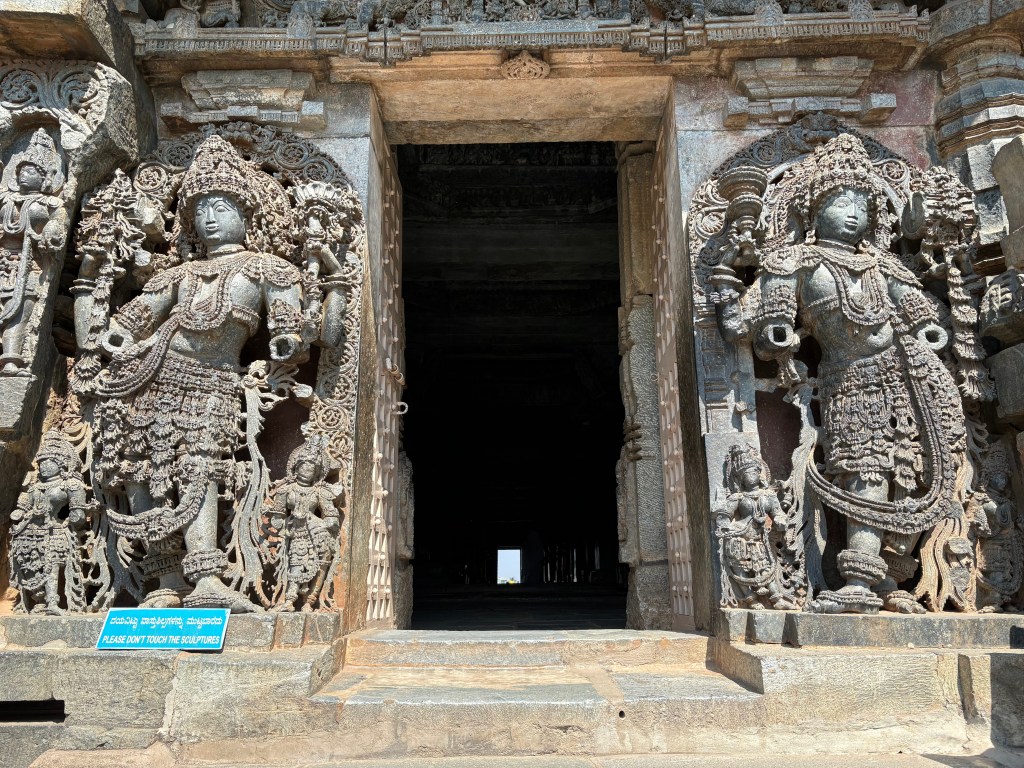
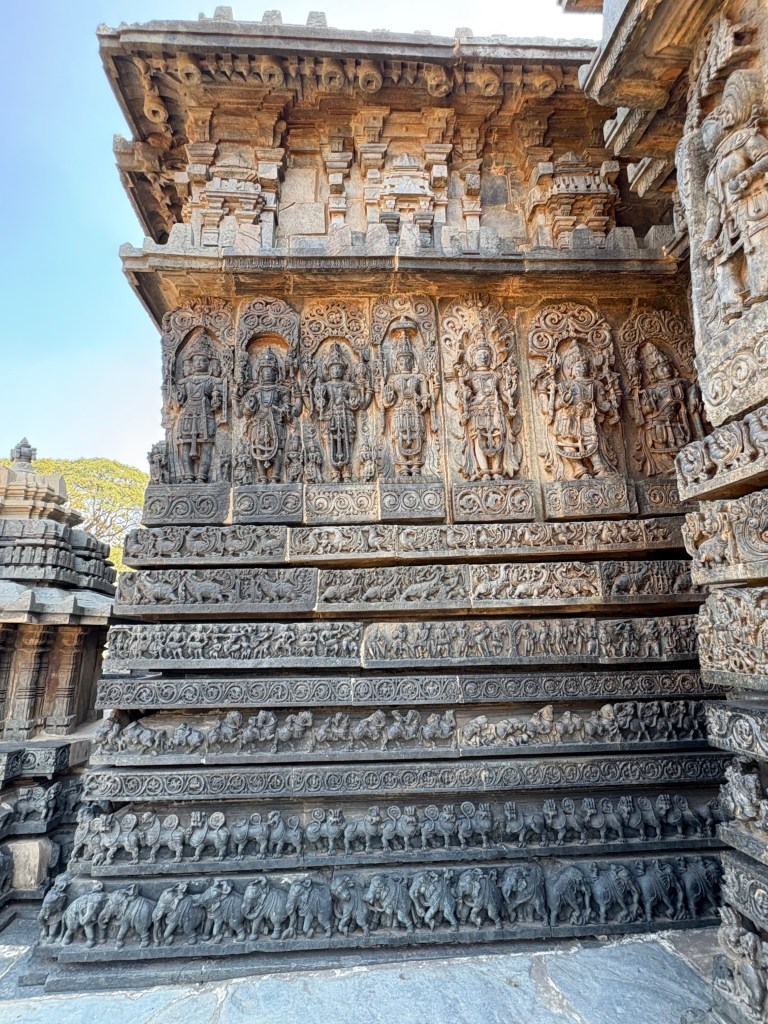
I then crossed the street and entered the Hoysaleshwara Temple grounds. Canvas-like layers of intricate carvings in the temple walls told tales from the Shiva Purana, Bhagavatha Purana, and Ramayana epics. The extent of this detailed work boggled my mind. Everywhere I looked fantastic images and statues told of a golden era of craftsmanship and empire. This temple is nearly 1,000 years old and took 117 years to complete (1117 to 1235 CE).
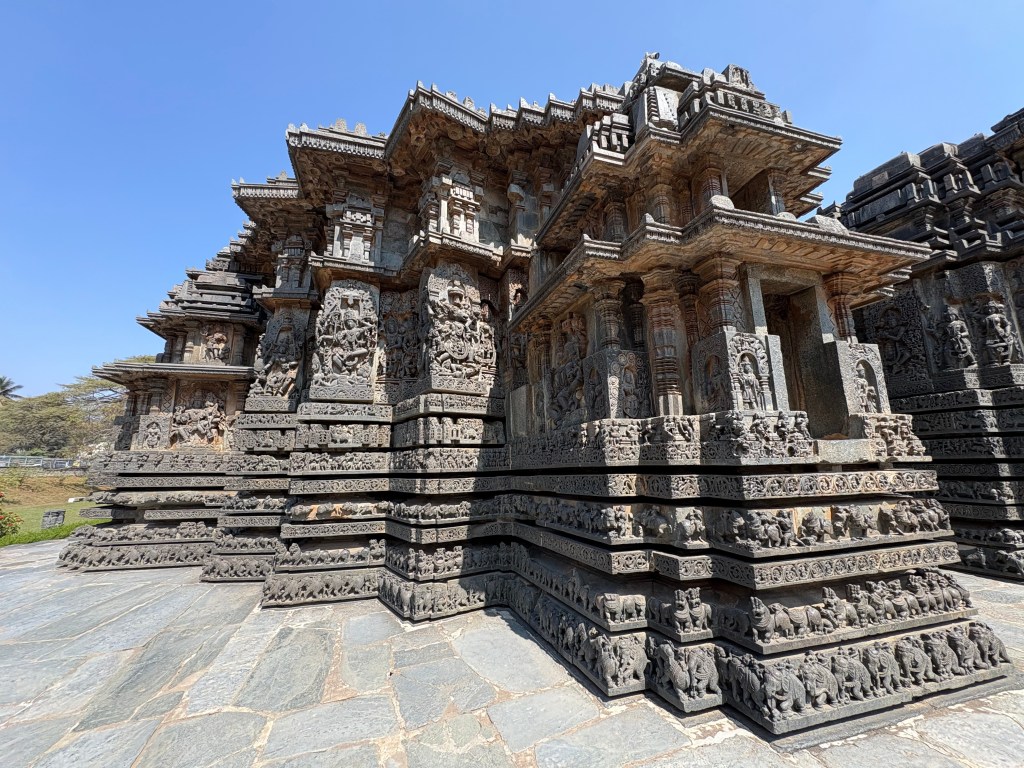
The temple construction was sponsored by King Vishnuvardhana to honor Lord Shiva. It is celebrated for over 240,000 highly detailed images, including Hindu deities, animals, and mythological scenes. It is noted for its stellate (star-shaped) plan, which allowed for maximum exterior wall surface for intricate carvings.
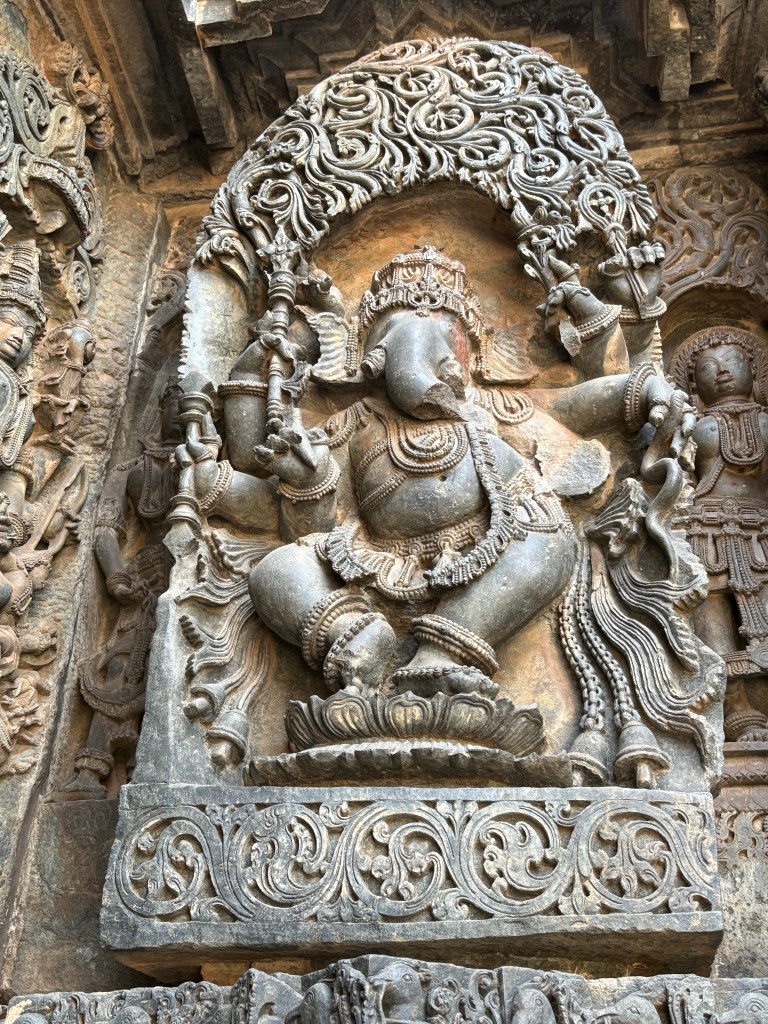
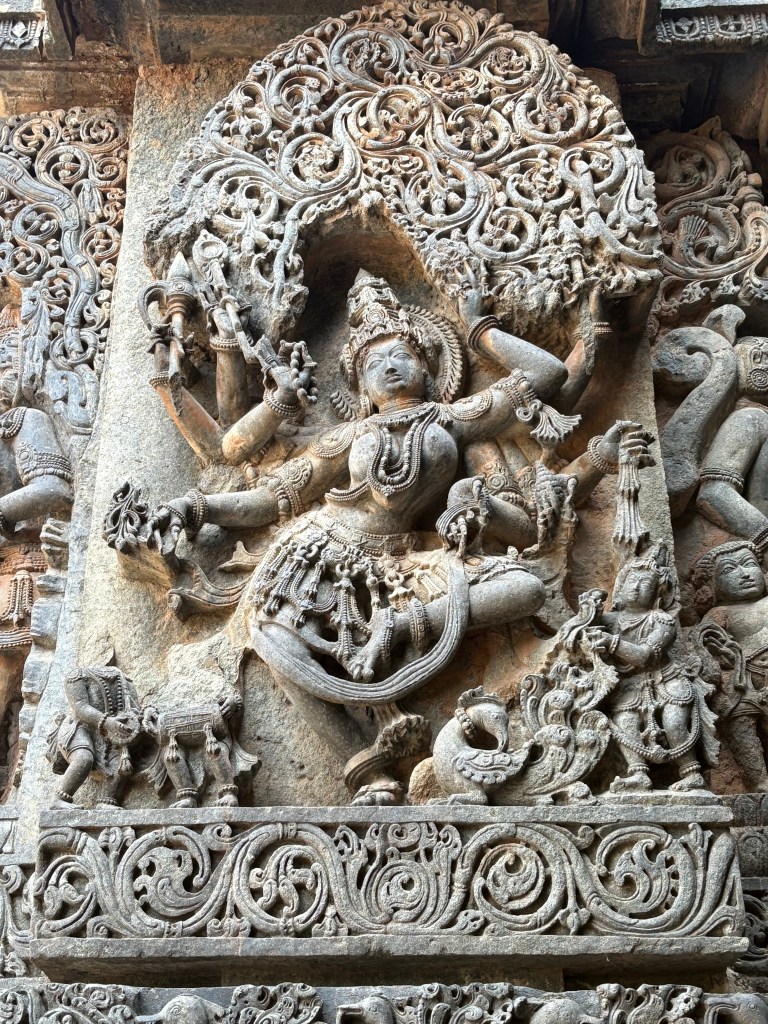
The temple includes two major shrines facing east, each with a corresponding Nandi pavilion (Nandi is a massive bull and Lord Shiva’s constant companion and mount). It is famous for the Garuda Stambha (pillar), which honors bodyguards who committed suicide upon their master’s death.
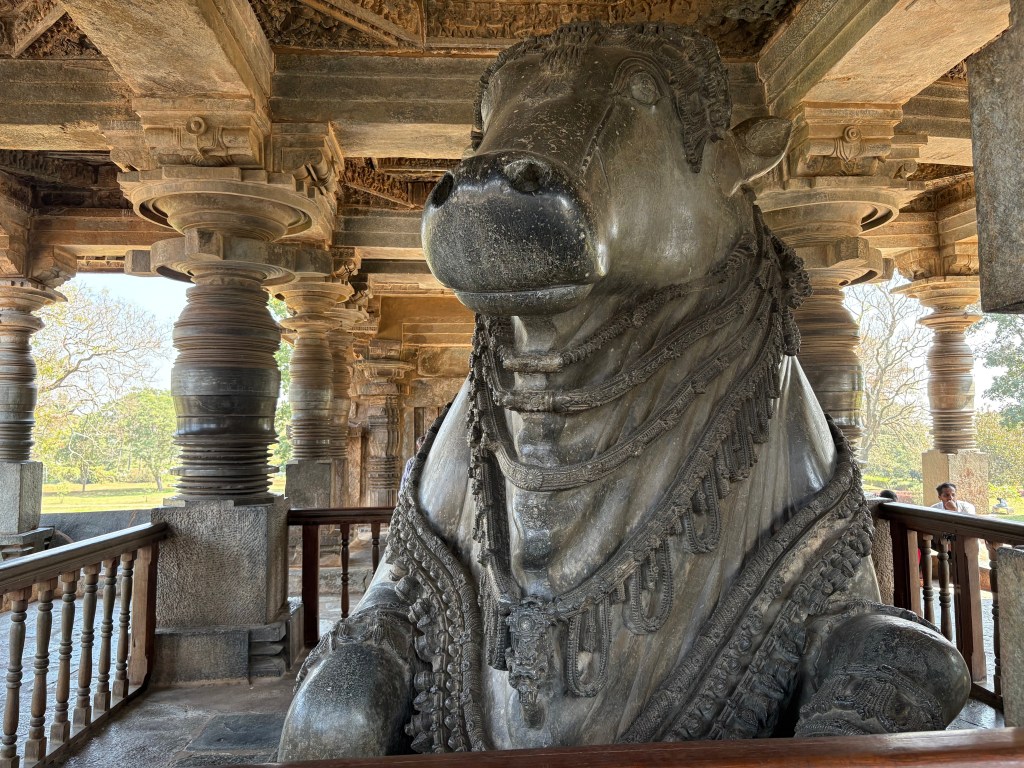
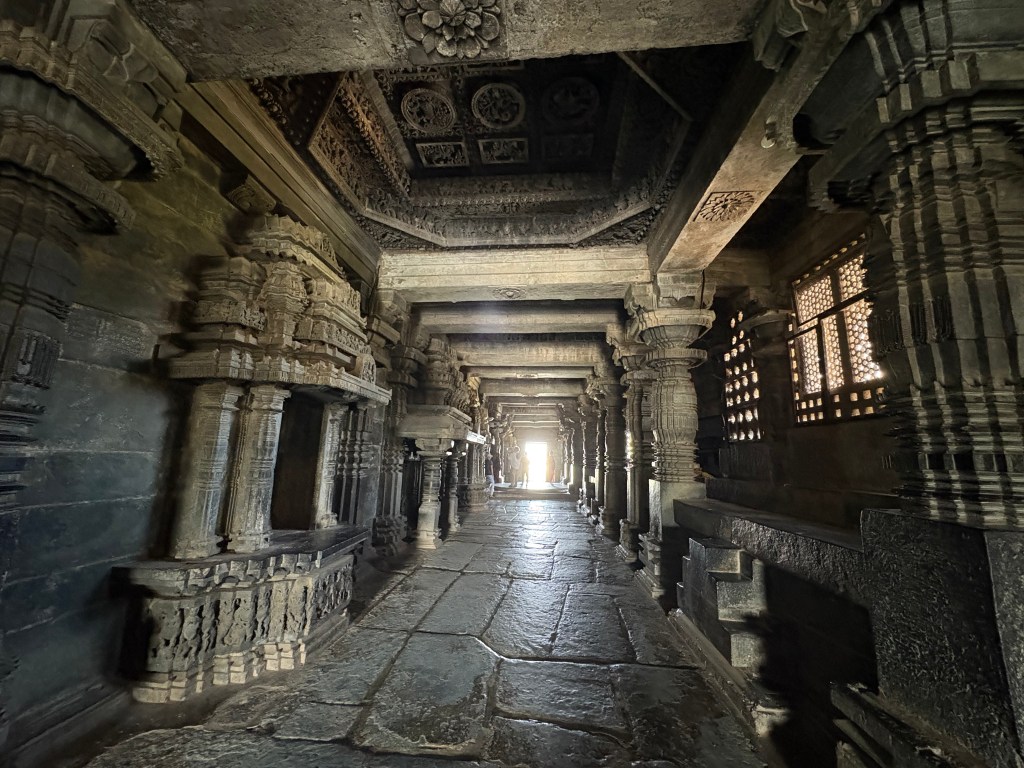
The interior of the temple provided a cool contrast to the blazing sun outside. The intimate design and vibration of silent devotion contrasted with the complex designs of the outer walls and featured polished soapstone, intricately carved pillars, and two main sanctums (𝑔𝑎𝑟𝑏ℎ𝑎−𝑔𝑟𝑖ℎ𝑎) housing large Lingams. A sense of worship permeated the overall atmosphere.
After spending hours absorbing the astounding artistry of this temple, I retired to the spacious gardens and relaxed beneath a cluster of trees. The depth and scope of India’s rich cultural history mirrored the expansion of my eternally grateful heart, ever bursting outward to contain the wonders of this magical land and its people.


 Divine Warrior
Leave a comment