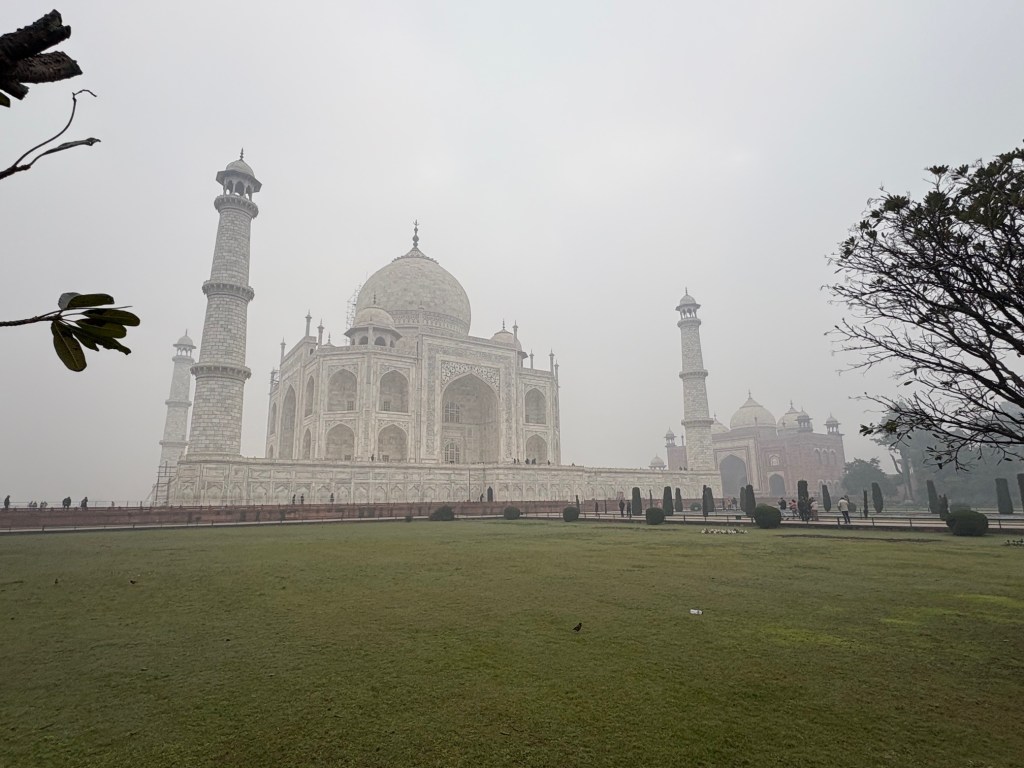
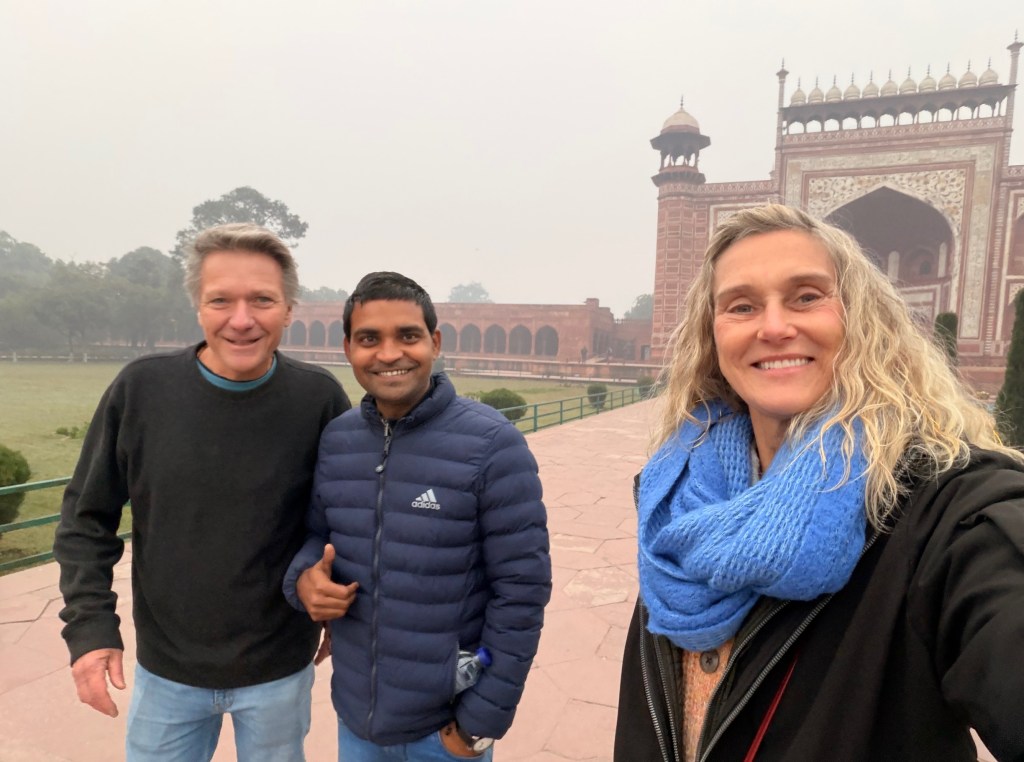
Rhonda and I spent our last morning traveling together on a sunrise tour of the magnificent Taj Mahal, which is one of the greatest monuments to devotional love ever dedicated to another human being. The level of manual, creative and intellectual work that went into 22 years of building this mausoleum, utilizing 20,000 workers, boggles the mind. Had it not been for our equally magnificent tour guide, Immy, many mesmerizing facts would have eluded us.
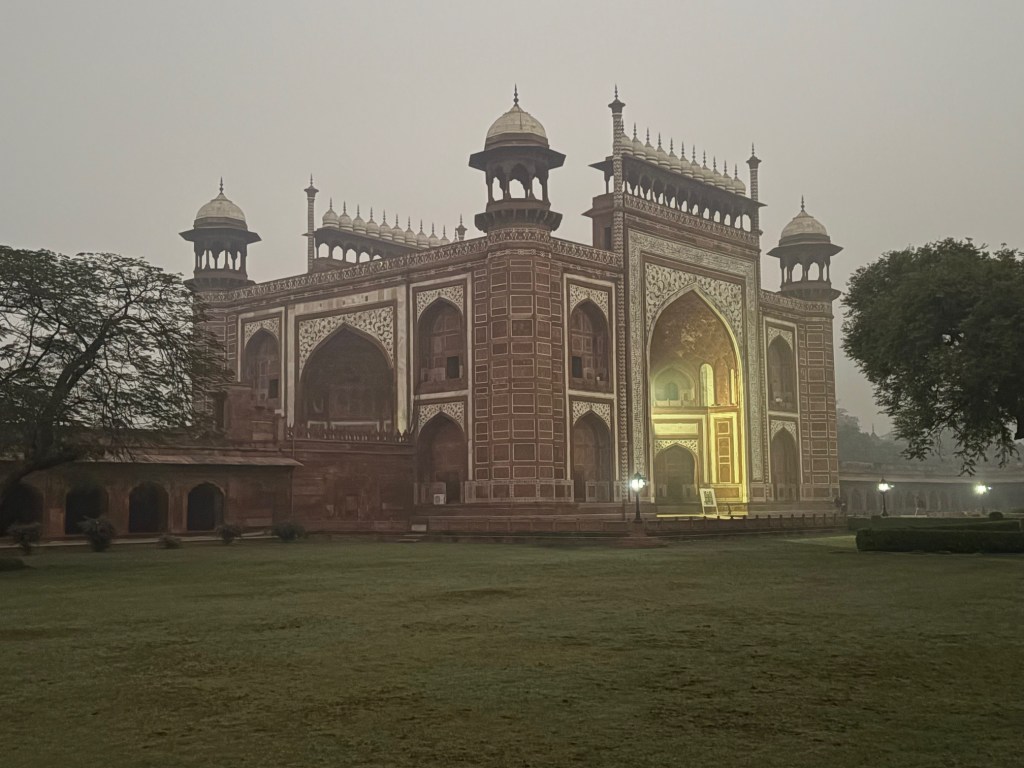
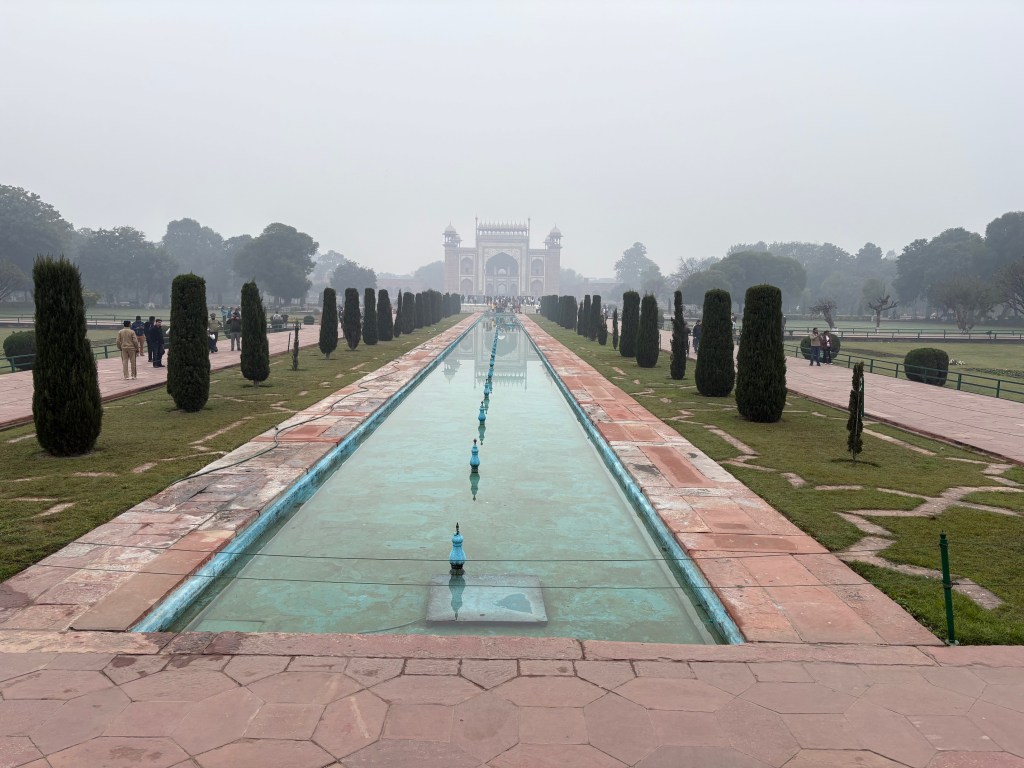
The symmetrical design of the sprawling, 42-acre complex becomes evident as soon as you approach the Main Gate. There are actually four gates facing one another equally distant from one another. Atop the Main Gate sit 22 domes, one for each year it took to build the Taj Mahal. As you walk through the gate the Taj Mahal appears to be much closer than it actually is — this being one of the many optical illusions created here.
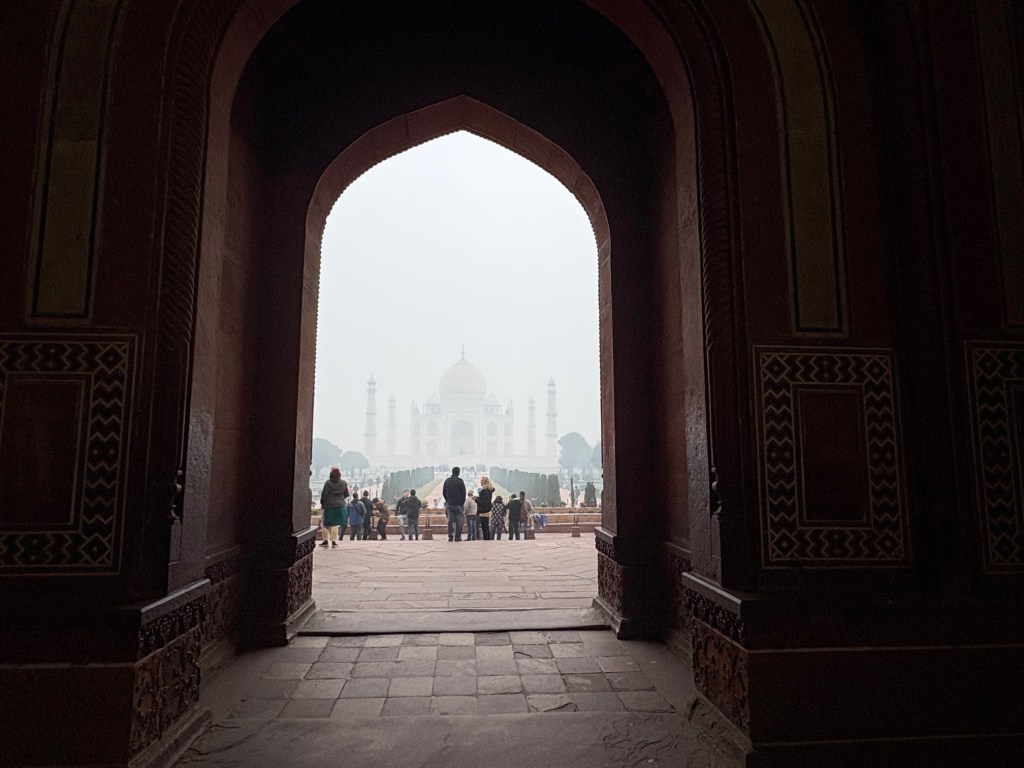
“What is your impression of the Taj Mahal from this vantage point?” Immy asked us.
“It appears celestial,” I said, “As if it is floating in the air.”
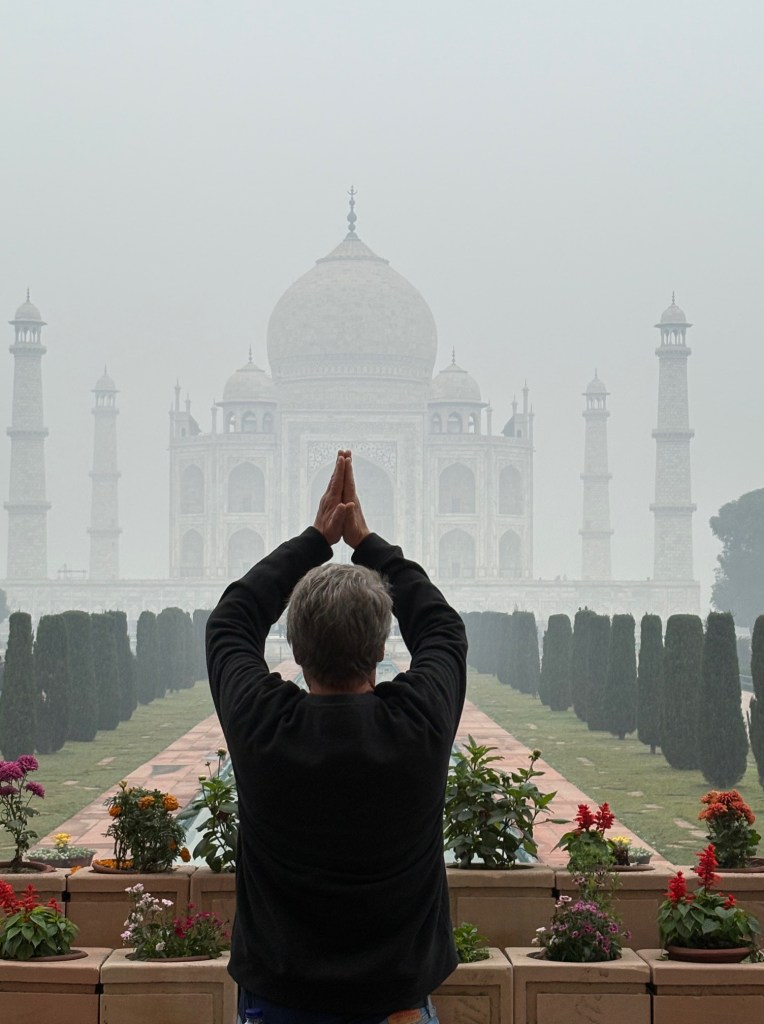
“That is the impression they wanted to achieve, as if it exists in the heavens.”
The Mughal Emperor Shah Jahan built this for his third wife; she was the only one he truly loved, having fallen in love with her at first sight at that Main Bazaar at Agra Fort as a young teenager and then not seeing her again for some years. His other two marriages were political arrangements, but this third wife, Mumtaz Mahal, was the real thing. They had 14 children together to prove it, but unfortunately, Mumtaz died during the birth of their last child together.
This devastated the most powerful Shah Emperor, and he fell into a deep depression, refusing to leave the confines of his room. They had been inseparable companions. Mumtaz traveled with him everywhere and was a close advisor. The Emperor’s hair turned white from grief, and it wasn’t until in a dream he conceived the Taj Mahal that he recovered his energy and dedicated much effort into building the greatest mausoleum the world has ever seen.
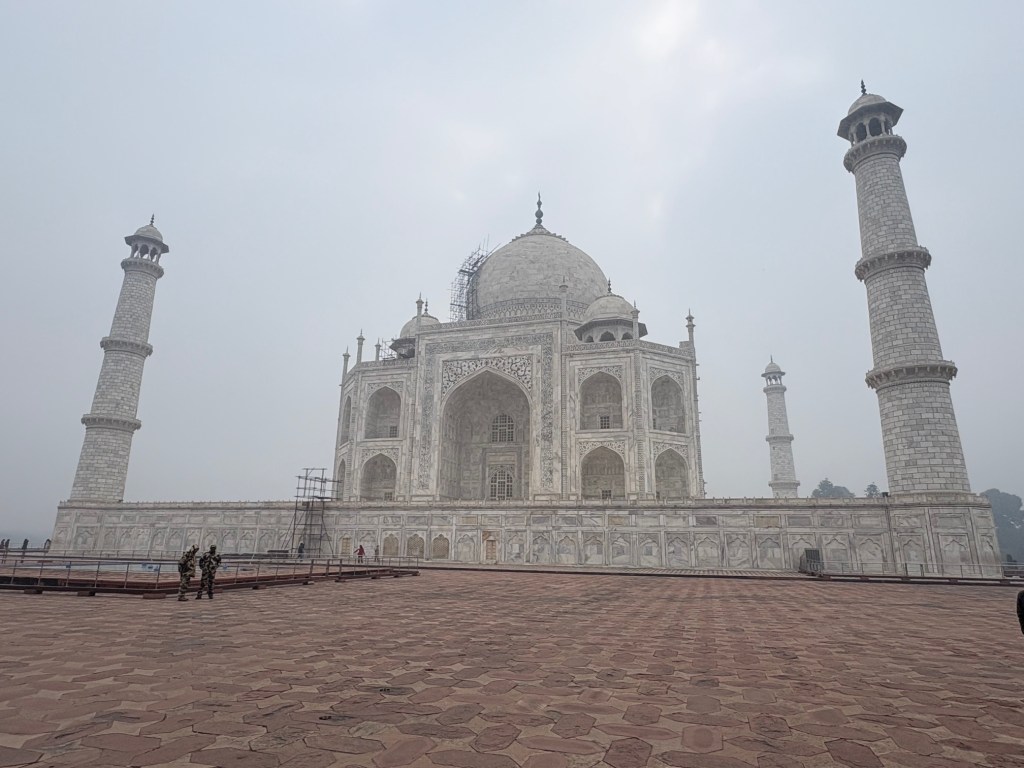
About 1,000 elephants were used to transport the heavy, pure white marble from its origin in Makrana, Rajasthan. The translucent marble changes color depending on the time of day, from bluish at dawn, to pinkish in the evening, to golden under moonlight. Immy pointed out the incredible craftsmanship utilized to create lettering, designs, ornamental effects and carvings. The famed towers of the Taj Mahal actually lean outward so that they appear perfectly straight from all angles.
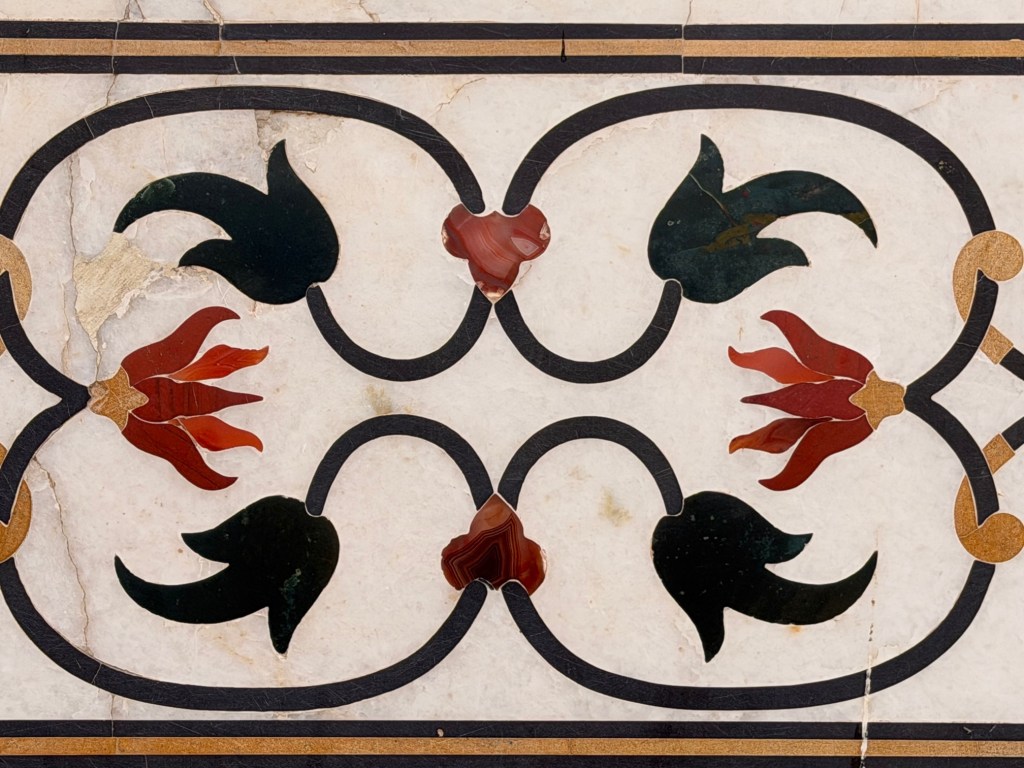
Twenty-eight varieties of precious and semi-precious stones from across Asia were used to inlay the intricate designs found all about the mausoleum. Eight intricate, pierced marble panels form an octagonal screen surrounding the tombs of the Emperor and his beloved wife. Each panel took five months to complete.
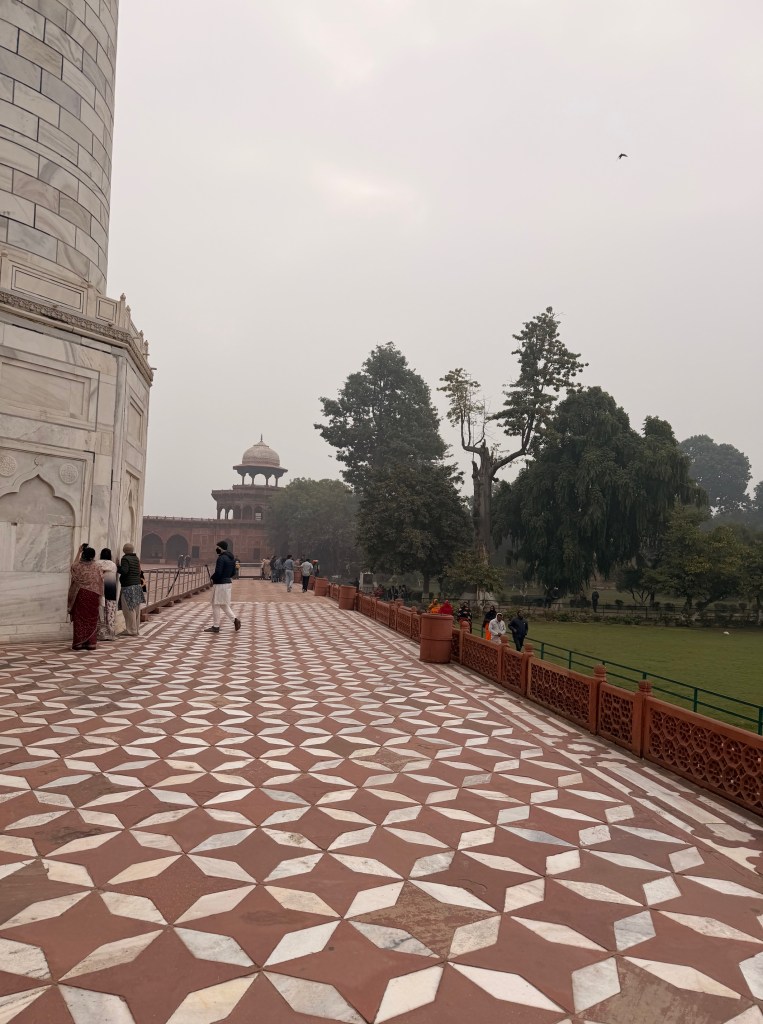
Outside two mosques flank the mausoleum, and a dazzling plaza creates an optical illusion no matter which way you look.
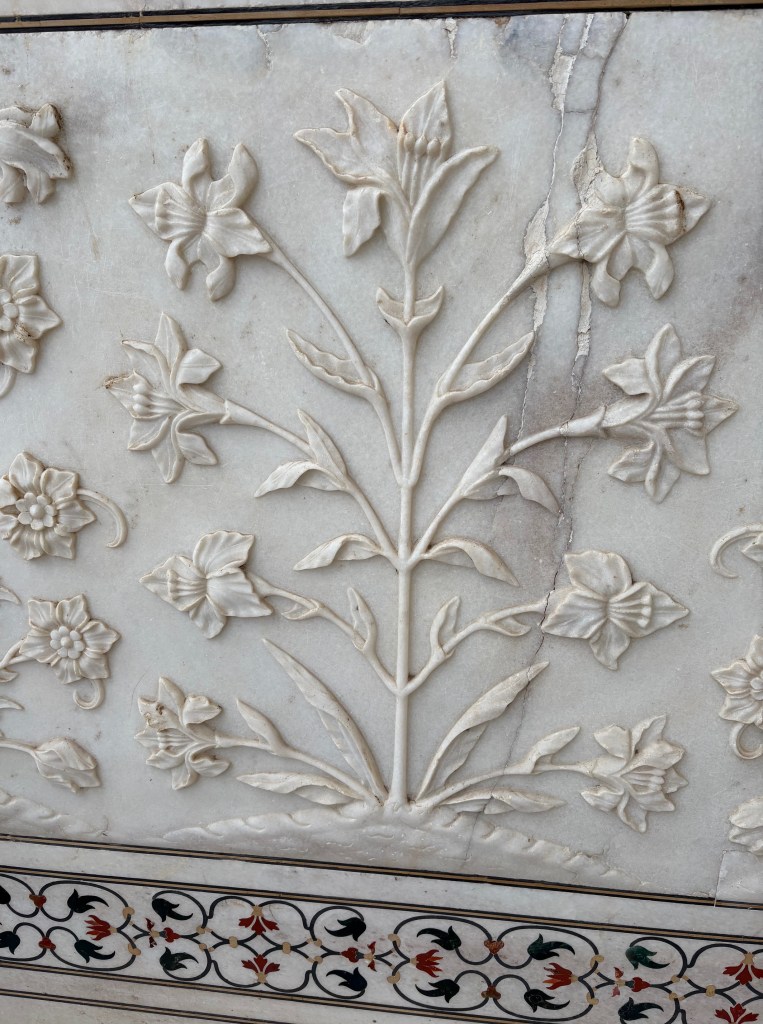
We spent hours admiring this symbol of an eternal bond between two lovers who shared a divine love deserving of such a celestial monument. Never again will we see man produce such a wonder with his own hands. The Taj Mahal is not only a testament to the power of love, but also represents the greatest artistic heights and craftsmanship ever attained by man. What other awe-inspiring works lay buried in the rubble of history we will never know.
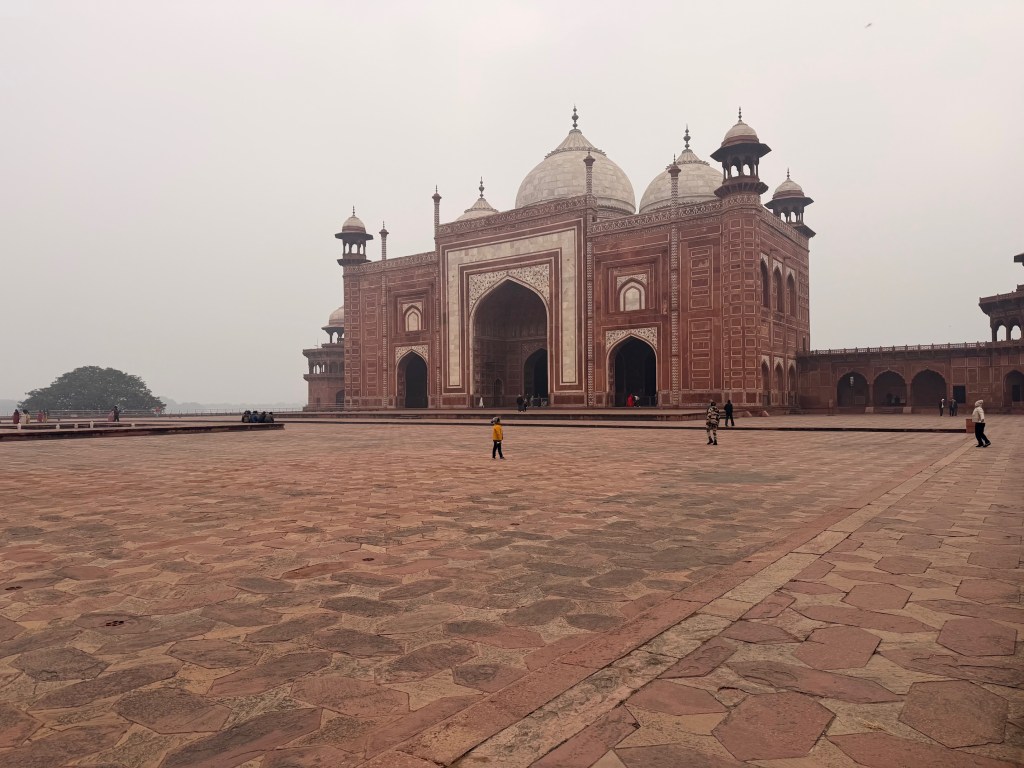


 Divine Warrior
Leave a comment