“He who possesses little is so much the less possessed. Blessed be a moderate poverty!” — Friedrich Nietzsche
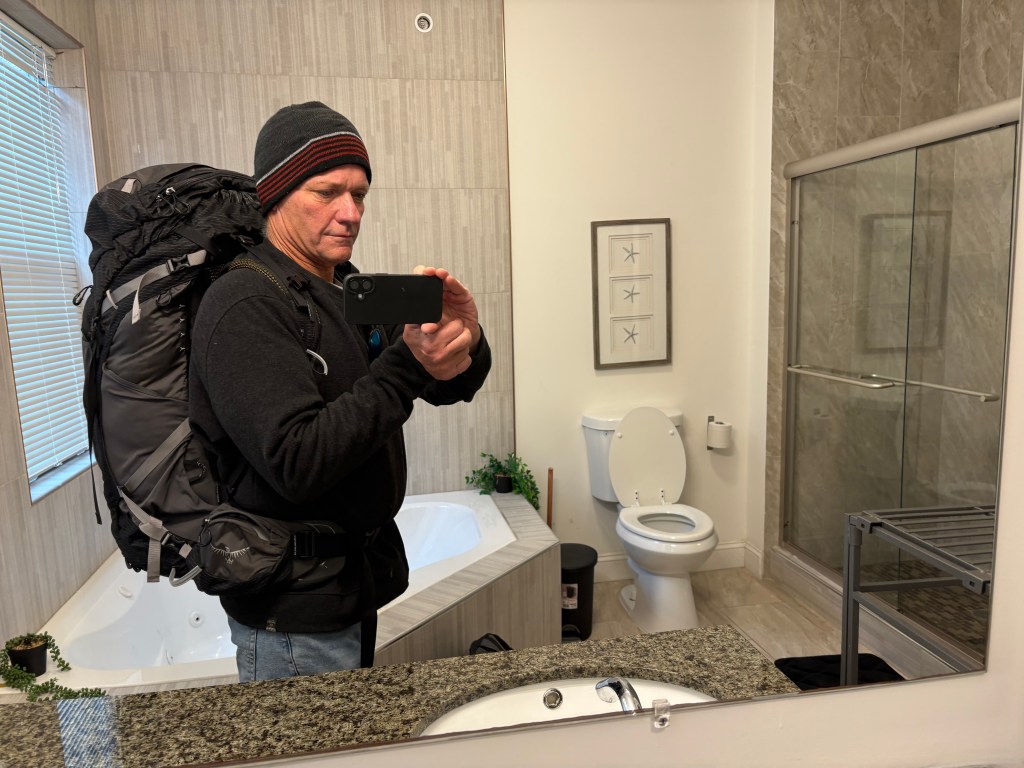
After a month-long journey across the Sates, which involved incredible adventures and visits with friends, I had Rich drop me off at the Syosset railroad station on Long Island and boarded a train for Jamaica Station and JFK with a backpack on my shoulders and a small bag in my hand.
It went down like this: as soon as I got back from that extraordinary motorcycle pilgrimage through the Himalayas, I had to pack and be out of my home of four years within a couple of days. It took a monumental effort involving giving items away through Craigslist, ditching other items around town, packing all my books and clothes, and deciding what to toss and what to scatter amongst friends. I also had to sell my car and e-bike. I had to perform all of this within 48 hours while subjected to an 11 ½ time change.
All of this commotion provided an excellent lesson on how possessions weigh us down; not only that, but disconnecting from the life I had built in Santa Barbara over four years proved troublesome and complicated: canceling insurances, dealing with phone numbers and bills, figuring out how I could access accounts without a permanent address and number…the Beast digs its claws into all of us, creating attachments and ties that are difficult to break, especially in this Age of Technology. Imagine someone with a house and plethora of bills to pay, kids in school, car payments, credit card bills…the list goes on. I had lived a simple life over the last four years in Southern California and it was still difficult for me to cut the tie to society. And people think they are free – ok, if you are so free, let’s see you disappear for a month. Just walk out the door and go. How many can do that? Dreadfully few. Or doing any other thing your heart desires that takes you out of the corporate environment of staged entertainment, strip malls, dining out, internet scrolling, TV sitcoms, video streaming, and social media – and all of the bills and psychological energy attached to that. That is the construct we have built; that is the construct that sucks the life blood out of humanity and trashes our environment in the process.
I whittled it all down to what I could fit in the van. This involved running items over to Alex’s house and dumping them there while I moved other things around. I finally got it all sorted in her driveway and still had to give more away: I gave her my printer, fold-out bed for guests, and other STUFF that really didn’t seem that important. This all got me to thinking how we desperately need to examine our relationship with STUFF. We exert so much energy accumulating STUFF, especially now with Amazon and our whims and desires just one click away from temporary fulfillment: more crap to pile up in the house.
Once I had my van filled, as well as a large canvas bag for storing gear strapped to the roof, I wondered how much of this I actually needed. I could easily cut it in half.
I certainly had too many clothes. I already had dumped two bags at a donation spot and probably could have dumped two more. How did I accumulate so much? Were the books necessary to haul across the country? I had five boxes of them. They carried a huge sentimental value, existed as a mental treasure for me, but how many of them would I page through again? Was it just to satisfy my ego and to be able to display these books in some future room that I lugged them across the country? I could have given those away as well. I had lots of notebooks filled with scroll, ideas that came and went without further action…wisps of thought that maybe better left in the ether to evaporate rather than take up physical space. I had posters, knickknacks, desk items, lamps, beach towels, hangers, posters, blankets, sheets, six pairs of sneakers, shoes, or boots.
How much of that did I really need? If I were to come back from my travels and build a life in another room, and I wanted to surround myself with this identity of belongings that I had accumulated, this STUFF, then I needed nearly all of it, and I believe to that I was clinging…the possibility of return to an established life. But wasn’t I going to leave that behind? Then why keep all this stuff? What was there to “come back to”? People and places mean a lot to me, but STUFF…I don’t need all of these things.
My Osprey backpack I greatly valued. My lightweight tent and sleeping bag and assorted camping gear. This was all important to a mobile existence if I still wanted to maintain a level of independence and convenience. I had my mountain bike hooked to the back of the van. I enjoy riding. My computer and a few books and notebooks were essential. A few pens. Some paper. Pictures of my children. I needed half the clothes I had, if that…whatever I could fit in the backpack. That was it. The rest was superfluous.
I could have done this differently. I could have disposed of it before leaving, and I did think of that. But that took time. Where to take it all in two days? I felt guilty to just throw it in a dumpster, considering the money and mental investment that went into these things, but that would have been the most expedient method. But what waste, and someone else could use some of this STUFF. But who? And how would I find them so quickly – there are only so many things you can give away through Craigslist. The homeless guys I fed down by the beach? How would they haul it around, and wouldn’t it just burden them? It was a pile of crap. Some items, I sheepishly admit, I did just leave on the side of the road. So I moved the rest back to the Schwenksville house, stuffed it up in the attic, and left it to accumulate time and dust.
Now I just had my Osprey backpack and a small shoulder bag that I could fold up into a small bag if so desired. I am closer to Jesus, closer to giving it all away as he commanded, which I should have done from the outset and perhaps I will do when I get home and have time to just put it on the street in front of the house and put a “Free Stuff” sign there. It will disappear quickly. And I must learn to live with what I have now in the Osprey backpack. That time will come. This trip is intended to whittle my possessions down to a small rucksack and my needs to the most rudimentary essentials. I will start giving away books after I read them. I will buy less things. If I settle down anywhere again, I will live as a monk in a simple bare room.
But that is why I have the van. The van takes me to the people and places I care about. It also allows me to store more than I need. It is my monastery on wheels, my Himalayan cave. And when this van has run its course, my final extravagance will be to purchase a wonderful van in which I can stand up and move around more easily. That’s it. Then I will be an outcast of the road, one of the many who have chosen the van life and found that existence to deliver freedom and discovery – freedom from the trappings of society and STUFF and discovery of our inner selves within the extraordinary outer environment of our beautiful country. The last good things about America: its incredible nature and some of its fantastic people. That is what I love to explore, as well as my inner Self which I know is connected to this larger realm of people and places.
5:00 am. I woke up a few hours ago, went downstairs to boil water in the lobby, poured some coffee that quickly exploded in the glass, and am now ready to walk along the Puri beach to Jagannath Temple, which is the abode of the Lord of the Universe and one of the four dhams (pilgrimages) of India. It is believed that the present structure was built in the 12th Century by King Ananta Varman Chodaganga Deva, who was the founder of the Ganga Dynasty. It is said that Jesus lived here for two years before being chased out because of his teachings of an egalitarian society. Kabir, Swami Ramdas, Adi Shankaracharya, Emperor Akbar, Swami Vivekananda, Subhash Chandra Bose and many others traveled here. Many came to participate in the fascinating Ratha Yatra festival. And, of course, my dearest Guruji and Paramaguruji lived but steps away in Karar Ashram, which I also intend to visit. I was there yesterday and met the Swami in charge of the place – who I found to be a bit grumpy – and a young man who showed me around. I intend to meditate there by the Samadhi Mandir Temple of Swami Sri Yukteswar.
At the Ragannath Temple they denied entry to Mahatma Gandhi and Rabindranath Tagore, among others. And will I join that list? Let’s go and find out. This boisterous town is already rising, and it’s not even 6:00 am; the cacophony of noise has begun. Loud banging and voices in the hallways, horns blowing outside, a truck rattling past. Soon the discordant music will ring from all corners, the horns of impatient drivers will begin to blast, and bustling activity will color the streets: food vendors cooking up their dumplings and naan, peddlers selling their wares, bare-chested renunciants wandering about, poverty-stricken souls crouched in corners, bare-foot souls tramping through the garbage and dust and mud…it is overwhelming depressing and invigorating all in one. It is India. Off I go.


 Divine Warrior
Leave a comment